Japanese Egg Sandwich (Tamago Sando)

Have you ever encountered a dish so simple in its construction, yet so astonishingly delicious that it makes you pause? A food that manages to be both deeply comforting and surprisingly refined? If you’ve been on the hunt for that flawless, cloud-like sandwich that completely transforms the classic egg mayo, then we believe your search is over. We’re celebrating the iconic Japanese Egg Sandwich (Tamago Sando), a culinary gem that originated in the convenient stores of Japan.
Prepare to set aside your preconceptions about ordinary egg sandwiches, because the Tamago Sando exists in a class of its own. It is a masterful blend of textures and tastes: a rich, creamy egg filling with a subtle sweetness, carefully tucked between two slices of heavenly Japanese milk bread. It serves as the ultimate comfort food, a delightful addition to any lunchbox, and a wonderfully satisfying snack. Today, we’re excited to guide you through recreating this cherished classic in your own kitchen, and we assure you, it’s simpler than you might imagine.
What Makes a Japanese Egg Sandwich So Special?
On the surface, the Tamago Sando appears deceptively straightforward. It’s merely eggs, mayonnaise, and bread, isn’t it? Well, that’s both true and not entirely the case. The real enchantment is found in the finer points—the specific ingredients and the meticulous method that elevate these basic elements into something truly remarkable. This is more than a sandwich; it’s a culinary experience.
First popularised in Japan’s famed convenience stores, known as konbini, the Tamago Sando was initially conceived as the ideal grab-and-go meal. However, it soon blossomed into a cultural sensation, adored for its flawless execution. The secret begins with the bread, typically shokupan, a feathery, slightly sweet milk bread with an incredibly soft texture. Next is the filling, which relies on high-quality eggs and, most importantly, Japanese mayonnaise. This pairing yields a rich, custardy consistency that is utterly irresistible. It is this profound attention to detail that transforms a humble snack into a gourmet pleasure.
Why You’ll Love This Recipe
- Wonderfully Simple to Prepare: With only a few core ingredients and straightforward steps, you can craft a café-worthy sandwich right at home. It’s an ideal recipe for novices and experienced home cooks alike.
- A Symphony of Textures: The beautiful contrast between the fluffy, soft bread and the sumptuously creamy egg filling is precisely what makes this sandwich so compelling. Each mouthful is a pure delight.
- Surprisingly Nuanced Flavour: Although the list of ingredients is brief, the fusion of tangy Japanese mayo, a whisper of sweetness, and rich egg yolk culminates in a perfectly balanced and deeply satisfying taste.
- The Ultimate On-the-go breakfast: This sandwich is perfectly suited for packed lunches, picnics, or a swift morning meal. It holds its shape well and remains delicious even after several hours.
- Adaptable to Your Liking: Our recipe presents the classic version, but we will also provide simple variations, including instructions for a delightful Cheese egg sandwich alternative!
Ingredients
- 4 large, high-quality eggs
- 8 thick slices of Japanese milk bread (Shokupan) or soft, thick-cut white bread
- 80g (about 1/3 cup) Japanese mayonnaise (Kewpie is highly recommended)
- 1 tablespoon full-fat milk or single cream
- 1 teaspoon sugar
- 1/2 teaspoon salt, or to taste
- 1/4 teaspoon white pepper
- 1 teaspoon Dijon mustard (optional, for a slight tang)
- Softened unsalted butter, for spreading
How to Make the Perfect Tamago Sando Filling
The very essence of the Japanese Egg Sandwich lies in its filling. Achieving that flawless custardy, creamy consistency is paramount, and it all begins with how you cook the eggs. We have found that using a mix of hard-boiled eggs and yolks that are slightly softer provides the very best results.
Step 1: Cooking the Eggs
First, we must boil the eggs. Position the eggs in a medium saucepan and add enough cold water to cover them by approximately an inch. Bring the water to a vigorous boil over a high heat. As soon as it boils, lower the heat to a gentle simmer and begin your timer.
- For perfectly cooked yolks that retain a slightly jammy centre, we suggest simmering for precisely 9 minutes.
- When the timer sounds, promptly move the eggs into a bowl filled with ice water. This action halts the cooking process and makes peeling them significantly easier.
- Allow the eggs to cool completely in the ice bath, which should take about 10–15 minutes, before you begin to peel them.
Step 2: Creating the Creamy Egg Salad
With your eggs peeled, it’s time to craft the magical filling. The key ingredient here is Japanese mayonnaise. Brands like Kewpie are formulated with only egg yolks (rather than whole eggs) and use rice vinegar, lending them a richer taste and a tangier profile that is less heavy than Western varieties. You can usually find it in Asian supermarkets or online, and we strongly encourage seeking it out.
- For two of the eggs, separate the yolks from the whites. Place these two yolks into a medium mixing bowl. Mash them well with a fork until you achieve a smooth paste.
- Add the Japanese mayonnaise, milk (or cream), sugar, salt, and white pepper to the mashed yolks. Whisk these ingredients together until you have a smooth, creamy, and golden sauce. This will serve as the flavourful foundation for our filling.
- Coarsely chop the remaining two whole eggs along with the two reserved egg whites. We want to preserve some texture, so avoid mincing them too finely. Pieces of about 1cm are ideal.
- Carefully fold the chopped eggs and whites into the yolk-mayonnaise sauce. Take care not to over-mix, as we want to maintain those lovely, distinct chunks of egg. Taste the mixture and adjust the seasoning if necessary.
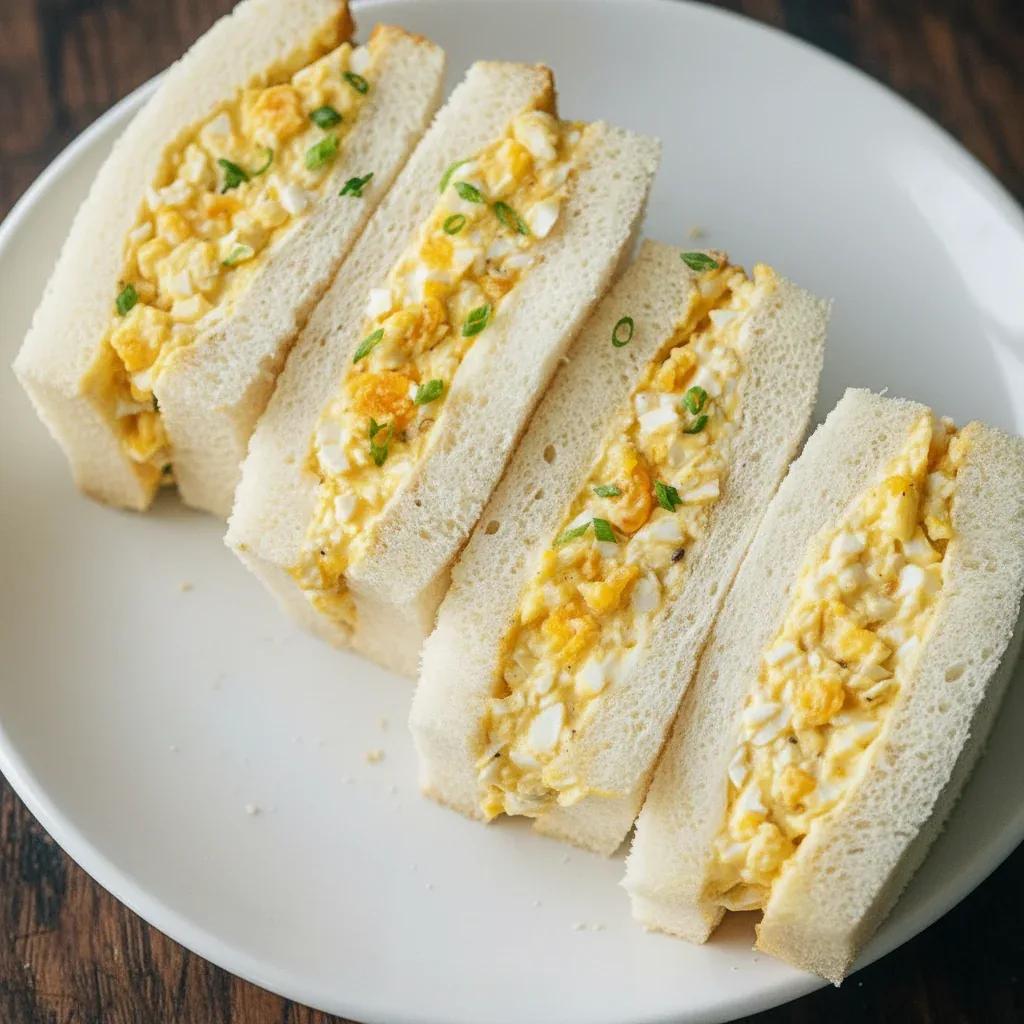
Your perfect Tamago Sando filling is now complete! It should be creamy, rich, and bursting with flavour, complemented by satisfying pieces of egg throughout.
Assembling Your Authentic Japanese Egg Sandwich
Now that the filling has been perfected, the final stage is assembly. And much like the filling, the choice of bread is vital for an authentic experience. As you prepare this, perhaps you could consider other simple yet elegant lunch ideas, such as our Light and Filling Cucumber Salad Sandwiches?
The Importance of Shokupan
Shokupan, or Japanese milk bread, is the traditional selection for good reason. Its distinctive production method (which uses a tangzhong starter) yields a loaf that is unbelievably soft, moist, and subtly sweet, with a fine crumb. It provides the ideal pillowy vessel for the creamy egg filling. If you are unable to find shokupan, the best substitutes would be a high-quality, thick-sliced brioche or a very soft, crustless white loaf.
Building and Cutting Your Sandwich
- Lay out your 8 slices of bread. Gently butter one side of each slice. This creates a moisture barrier that helps prevent the bread from becoming soggy.
- Distribute the egg filling evenly across four of the bread slices, spreading it generously right to the edges. Don’t be timid with the amount of filling!
- Place the remaining four slices of bread on top, buttered-side down. Press down gently to hold the sandwich together.
- For that classic konbini appearance, trimming the crusts is a must. Use a sharp, serrated knife to neatly slice away the crusts from all four sides of each sandwich. This step is crucial for achieving that signature soft texture in every single bite.
- To achieve perfectly clean cuts, you can wrap each sandwich snugly in cling film and refrigerate for 15–20 minutes. This allows the filling to set, making the slicing process much tidier.
- Unwrap the chilled sandwiches and slice them in half, either diagonally or straight across the middle.
Variations and Serving Suggestions
While the traditional recipe is a true masterpiece of simplicity, there is always room to add your own creative touch. For those who enjoy a bit of fusion, you might also like to explore other Asian-inspired lunch options like our Crunchy Asian Chicken Salad with Peanut Dressing.
Regarding this recipe, one of the most popular variations is a quick egg sandwich with a cheesy element. To create a delicious cheese and egg sandwich, simply lay a slice of mild cheddar or provolone onto the bread before adding the egg filling. For a little heat, you could add a dash of sriracha or a sprinkle of shichimi togarashi (Japanese seven-spice) into the filling. If your aim is to create a more Healthy Egg Sandwich, you could opt for light mayonnaise and wholemeal bread, though be aware that this will alter the authentic taste and texture.
FAQ
A Taste of Japanese Comfort
There we have it—everything you need to create the perfect Japanese Egg Sandwich in your own home. We’ve demonstrated that with some attention to detail and the correct ingredients, you can transform a simple breakfast sandwich into something truly exceptional. It stands as a testament to the notion that the most unforgettable meals are often the simplest, lovingly crafted with high-quality components.
So, the next time you find yourself yearning for a comforting lunch or a quick, satisfying snack, we wholeheartedly encourage you to try this Tamago Sando recipe. It is more than just a sandwich; it’s a small piece of Japanese culinary culture that we are confident will win you over.
Have you made a Tamago Sando before? We would love to hear how yours turned out or if you have any personal tips to share in the comments below. We always enjoy hearing from you!
Recipe Card
Ingredients
- 4 large, high-quality eggs
- 8 thick slices of Japanese milk bread (Shokupan) or soft white bread
- 80g (about 1/3 cup) Japanese mayonnaise
- 1 tablespoon full-fat milk or single cream
- 1 teaspoon sugar
- 1/2 teaspoon salt, or to taste
- 1/4 teaspoon white pepper
- Softened unsalted butter, for spreading
Instructions
- Place eggs in a saucepan with cold water to cover. Bring to a boil, then reduce heat to a simmer for 9 minutes. Immediately transfer the eggs to an ice bath to cool completely.
- Once cooled, peel the eggs. Separate the yolks from the whites for two of the eggs. Place these two yolks in a medium bowl and mash into a smooth paste with a fork.
- Whisk the Japanese mayonnaise, milk, sugar, salt, and white pepper into the mashed yolks until you have a smooth, creamy sauce.
- Coarsely chop the remaining two whole eggs and the two reserved egg whites. Gently fold them into the yolk-mayonnaise sauce. Do not over-mix.
- Lightly spread butter on one side of each of the 8 slices of bread. This creates a barrier to prevent sogginess.
- Evenly divide the egg filling among four of the bread slices, spreading generously to the edges. Top with the remaining four slices, butter-side down.
- Using a sharp, serrated knife, neatly trim the crusts from all four sides of each sandwich. For the cleanest cuts, you can wrap each sandwich in plastic wrap and chill for 15-20 minutes before slicing.
- Slice the sandwiches in half (diagonally or straight) and serve immediately.
Calories: 465,
Carbs: 41 g,
Protein: 13 g,
Fat: 24 g