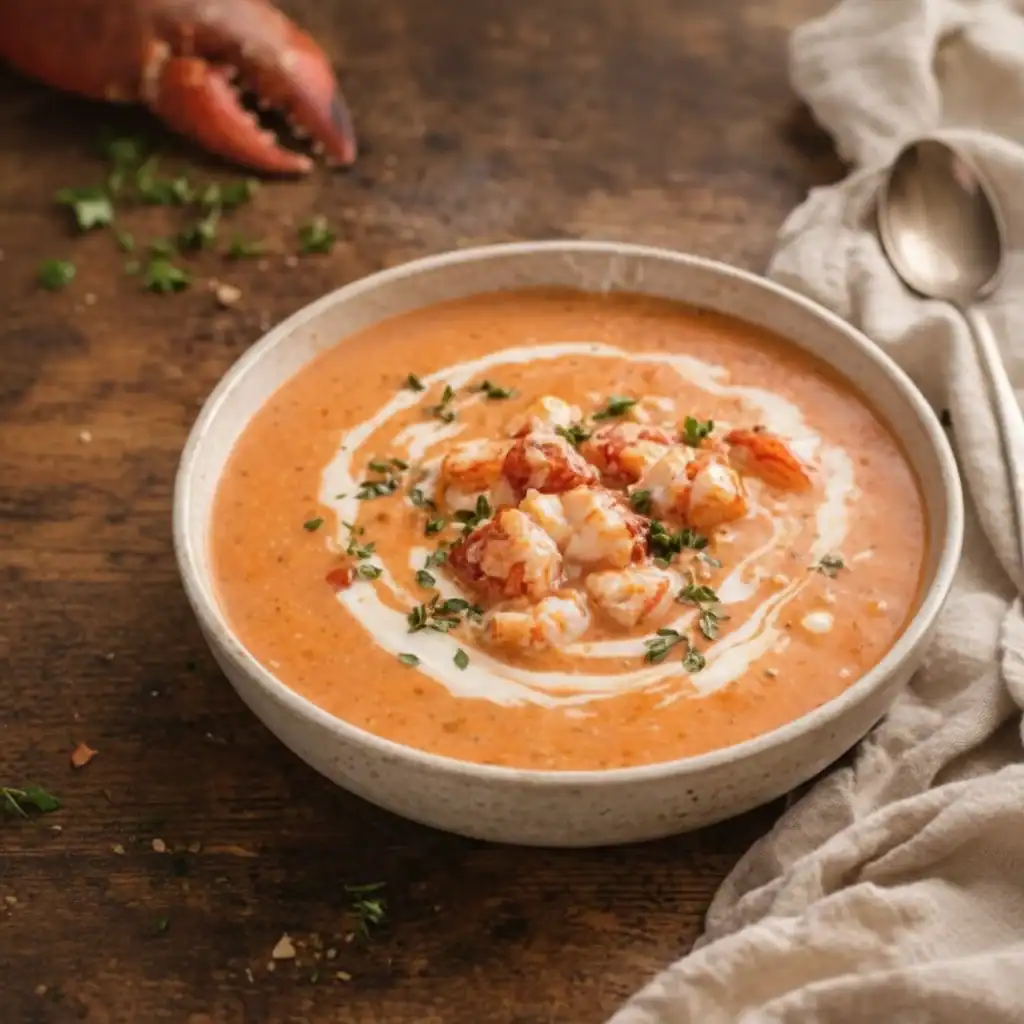
Rich Creamy Lobster Bisque
There are some dishes that just feel like an event. A bowl of rich, velvety lobster bisque is certainly one of them. It speaks of special occasions, of cosy restaurants by the sea, and of taking the time to create something truly magnificent from just a handful of quality ingredients. This recipe was inspired by a similar soup I enjoyed on a blustery day in a seaside town in Brittany, and I’ve been perfecting my version ever since. It’s not just a soup; it’s an experience. The deep, savoury flavour comes from using every part of the lobster, creating a base that is profoundly flavourful and wonderfully aromatic.
Forget the pale, thin versions you might have tried before. A proper, homemade lobster bisque should be deeply coloured, intensely creamy, and packed with the sweet, delicate taste of fresh lobster meat. What we’re making today is exactly that. It’s the kind of dish that makes guests’ eyes widen when you bring it to the table. This Lobster Bisque Bowl is ideal for an elegant dinner party starter, a luxurious lunch, or as the star of a celebratory meal like Christmas Eve or an anniversary.
Making a bisque from scratch might sound intimidating, but I assure you the process is straightforward and incredibly rewarding. We’ll walk through it step-by-step, ensuring you get that silky-smooth texture and restaurant-quality flavour right in your own kitchen. Let’s get started.
Recipe Overview
This lobster bisque recipe focuses on extracting maximum flavour from the lobster shells to create a rich, aromatic stock, which is then enriched with cream and brandy. The final soup is velvety smooth, with tender chunks of lobster meat stirred through at the end. I’ve tested this dozens of times, and I found that a tiny pinch of cayenne pepper is essential; it doesn’t add noticeable heat but brilliantly amplifies the natural sweetness of the lobster.
- Prep Time: 25 minutes
- Cook Time: 45 minutes
- Total Time: 1 hour 10 minutes
- Servings: 4 people (as a starter)
- Difficulty: Medium
Why You’ll Love This Lobster Bisque Bowl
- Genuine Deep Flavour: The taste is built in layers. We start with a classic mirepoix, toast the lobster shells to release their flavour, deglaze with brandy for a touch of warmth and complexity, and finish with double cream for a luxurious, velvety texture. It tastes authentic and expensive.
- Ready in Just Over an Hour: For a dish with such depth of flavour, it comes together relatively quickly. From start to finish, you can have this elegant seafood soup on the table in about 70 minutes.
- A Versatile Recipe: While lobster is the star, this bisque method works beautifully with other shellfish. You can easily substitute the lobster with an equal weight of large king prawns or even crab, using their shells for the stock.
- Great for Special Occasions: This works wonderfully for a sophisticated dinner party starter, a New Year’s Eve treat, or a romantic meal. It sets a truly special tone for any meal.
- Family Tested: My wife claims this is the best thing I make, so it has become my go-to recipe for our anniversary dinner each year. It always gets compliments from everyone who tries it.

Ingredients You’ll Need
For a truly exceptional bisque, using good quality ingredients is key. The fish stock, in particular, makes a big difference. I recommend using a fresh, refrigerated stock from the supermarket if you don’t have homemade. For the sherry, I always use a good quality dry sherry like Tio Pepe; its nutty notes are a perfect match for the lobster.
- 2 medium cooked lobsters (about 500-600g each)
- 2 tbsp unsalted butter
- 1 tbsp olive oil
- 1 large shallot, finely chopped
- 1 medium carrot, finely chopped
- 1 celery stick, finely chopped
- 2 cloves garlic, minced
- 2 tbsp tomato purée
- 60ml brandy or dry sherry
- 1 litre good-quality fish or vegetable stock
- 150ml double cream
- 1 tsp paprika (not smoked)
- A pinch of cayenne pepper
- Sea salt and freshly ground black pepper, to taste
- Fresh chives or parsley, finely chopped, for garnish
Adam’s Tip: Don’t even think about throwing away the lobster shells! They are the absolute secret to a deeply flavourful bisque. All that colour and intense seafood essence is locked inside them. Crushing them slightly helps release even more flavour into the stock.
How to Make This Lobster Bisque Bowl
The process involves three main stages: preparing the lobster, making the intensely flavoured bisque base, and then finishing the soup with cream and the reserved lobster meat. Follow these steps closely for a perfect result.
- Prepare the Lobster: Carefully remove the meat from the lobster tails, claws, and knuckles. Chop the meat into bite-sized pieces, cover, and refrigerate until needed. Take all the leftover shells and bodies and break them into smaller, manageable pieces. I use the back of a heavy knife or a rolling pin for this.
- Sauté the Aromatics: In a large, heavy-bottomed pot or Dutch oven, melt the butter with the olive oil over a medium heat. Add the chopped shallot, carrot, and celery (this is your mirepoix). Cook gently for 8-10 minutes, stirring occasionally, until the vegetables are soft and translucent but not browned.
- Toast the Shells: Add the broken lobster shells to the pot with the vegetables. Increase the heat slightly and cook for 5-7 minutes, stirring frequently, until the shells turn a brilliant red and smell fragrant and toasty. Add the minced garlic and tomato purée and cook for another minute until the purée darkens slightly.
- Deglaze the Pan: Pour in the brandy or sherry. If you’re feeling confident, you can carefully tilt the pan to flambé it (away from any extractor fans!). Or, simply let it bubble vigorously for about a minute until the alcohol has cooked off, scraping up any browned bits from the bottom of the pot. This step adds a crucial layer of flavour.
- Simmer the Stock: Pour in the fish stock, ensuring the shells are fully submerged. Add the paprika and cayenne pepper. Bring to a gentle simmer, then reduce the heat to low, partially cover, and let it tick away for 30 minutes. The liquid should reduce slightly and become incredibly aromatic.
- Strain for a Silky Base: Set a fine-mesh sieve over a large, clean bowl or another pot. Carefully pour the contents of the pot through the sieve. What works best for me is using the back of a ladle to press down firmly on the shells and vegetables to extract every last drop of flavourful liquid. Discard the solids in the sieve.
- Finish the Bisque: Pour the strained liquid back into your cleaned pot and place it over a medium-low heat. Stir in the double cream and gently heat through for 2-3 minutes. Do not let it boil, as this can cause the cream to split.
- Season and Serve: Taste the bisque and season generously with salt and freshly ground black pepper. Add the reserved, chilled lobster meat to the pot and stir gently for 1-2 minutes, just until the meat is warmed through. Overcooking will make it tough.
- Garnish and Enjoy: Ladle the hot lobster bisque into warm bowls. Garnish with a sprinkle of finely chopped fresh chives or parsley and serve immediately with some warm, crusty bread.
Tips From My Kitchen
- Temperature Control is Key: Once you add the double cream, maintain a gentle heat. Boiling the bisque at this stage can cause it to curdle or “split,” ruining the velvety texture. Keep it at a gentle simmer.
- The Secret to Smoothness: For an ultra-smooth, professional-grade texture, after straining the stock through a sieve, you can blend it with an immersion blender before adding the cream. I learned that this extra step emulsifies the fats and creates an even more luxurious mouthfeel.
- Make-Ahead Magic: You can prepare the bisque base (up to step 6) a day in advance. Let it cool completely, then store it in an airtight container in the fridge. When ready to serve, gently reheat, then proceed with adding the cream and lobster meat.
- Storage: Leftover bisque can be stored in the fridge for up to 2 days. Reheat it gently on the stovetop over low heat. I don’t recommend freezing this soup, as the cream can separate upon thawing, affecting the texture.
Equipment You’ll Need
- Large heavy-bottomed pot or Dutch oven
- Sharp knife and cutting board
- Fine-mesh sieve
- Ladle and wooden spoon or spatula
- Immersion blender (optional, for an extra-smooth finish)
Common Mistakes to Avoid
- Overcooking the Lobster Meat: The cooked lobster meat only needs to be warmed through at the very end. Adding it too early or boiling it will result in tough, rubbery pieces. Add it to the hot (not boiling) soup right before serving.
- Skipping the Shells: The biggest mistake is to discard the shells. They are not waste; they are the primary source of flavour. Sautéing them until toasty is fundamental to what a true bisque entails.
- Not Straining Properly: Rushing the straining step will result in a gritty or thin bisque. Take your time and press firmly on the solids in the sieve to extract all the liquid and flavour. A fine-mesh sieve is non-negotiable here.
Delicious Variations to Try
Once you’ve mastered the basic recipe, feel free to get creative. This bisque is a wonderful canvas for a few simple tweaks.
- Spicy Lobster Bisque: For a gentle warmth, add an extra pinch of cayenne pepper or a few dashes of your favourite hot sauce along with the cream. A finely chopped red chilli sautéed with the mirepoix also works well.
- Add a Touch of Saffron: Crumble a few threads of saffron into the warm fish stock before adding it to the pot. This will lend a beautiful golden hue and a subtle, aromatic flavour that pairs wonderfully with seafood.
- Different Seafood: As mentioned, this recipe is fantastic with prawns. Use about 600g of raw, shell-on king prawns. Sauté the shells just as you would the lobster shells, and add the peeled prawn meat at the end.
What to Serve With Your Lobster Bisque Bowl
This rich and creamy soup doesn’t need much accompaniment, but a few well-chosen pairings can elevate the meal further.
- Crusty Bread: A simple, high-quality baguette or sourdough loaf, warmed in the oven, is essential for soaking up every last drop of the bisque.
- A Crisp Green Salad: To balance the richness of the soup, a simple green salad with a sharp vinaigrette is ideal. Our Classic House Salad with Red Wine Vinaigrette offers the perfect fresh contrast.
- Wine Pairing: A dry, crisp white wine like a Chablis, an unoaked Chardonnay, or a dry Provençal Rosé works beautifully. The acidity cuts through the creaminess of the bisque without overpowering the delicate lobster flavour.
Frequently Asked Questions
Lobster Bisque Bowl
Ingredients
Method
- Prepare the Lobster: Carefully remove the meat from the lobster tails, claws, and knuckles. Chop the meat into bite-sized pieces, cover, and refrigerate until needed. Take all the leftover shells and bodies and break them into smaller, manageable pieces. I use the back of a heavy knife or a rolling pin for this.
- Sauté the Aromatics: In a large, heavy-bottomed pot or Dutch oven, melt the butter with the olive oil over a medium heat. Add the chopped shallot, carrot, and celery (this is your mirepoix). Cook gently for 8-10 minutes, stirring occasionally, until the vegetables are soft and translucent but not browned.
- Toast the Shells: Add the broken lobster shells to the pot with the vegetables. Increase the heat slightly and cook for 5-7 minutes, stirring frequently, until the shells turn a brilliant red and smell fragrant and toasty. Add the minced garlic and tomato purée and cook for another minute until the purée darkens slightly.
- Deglaze the Pan: Pour in the brandy or sherry. If you're feeling confident, you can carefully tilt the pan to flambé it (away from any extractor fans!). Or, simply let it bubble vigorously for about a minute until the alcohol has cooked off, scraping up any browned bits from the bottom of the pot. This step adds a crucial layer of flavour.
- Simmer the Stock: Pour in the fish stock, ensuring the shells are fully submerged. Add the paprika and cayenne pepper. Bring to a gentle simmer, then reduce the heat to low, partially cover, and let it tick away for 30 minutes. The liquid should reduce slightly and become incredibly aromatic.
- Strain for a Silky Base: Set a fine-mesh sieve over a large, clean bowl or another pot. Carefully pour the contents of the pot through the sieve. What works best for me is using the back of a ladle to press down firmly on the shells and vegetables to extract every last drop of flavourful liquid. Discard the solids in the sieve.
- Finish the Bisque: Pour the strained liquid back into your cleaned pot and place it over a medium-low heat. Stir in the double cream and gently heat through for 2-3 minutes. Do not let it boil, as this can cause the cream to split.
- Season and Serve: Taste the bisque and season generously with salt and freshly ground black pepper. Add the reserved, chilled lobster meat to the pot and stir gently for 1-2 minutes, just until the meat is warmed through. Overcooking will make it tough.
- Garnish and Enjoy: Ladle the hot lobster bisque into warm bowls. Garnish with a sprinkle of finely chopped fresh chives or parsley and serve immediately with some warm, crusty bread.
Notes
I hope you adore making and eating this Lobster Bisque Bowl as much as I do. It’s a recipe that turns any meal into a memorable occasion and proves that a little effort in the kitchen can yield spectacular results. Please let me know how you get on by leaving a comment below – I love hearing about your kitchen adventures!
Happy cooking,
Adam Henderson