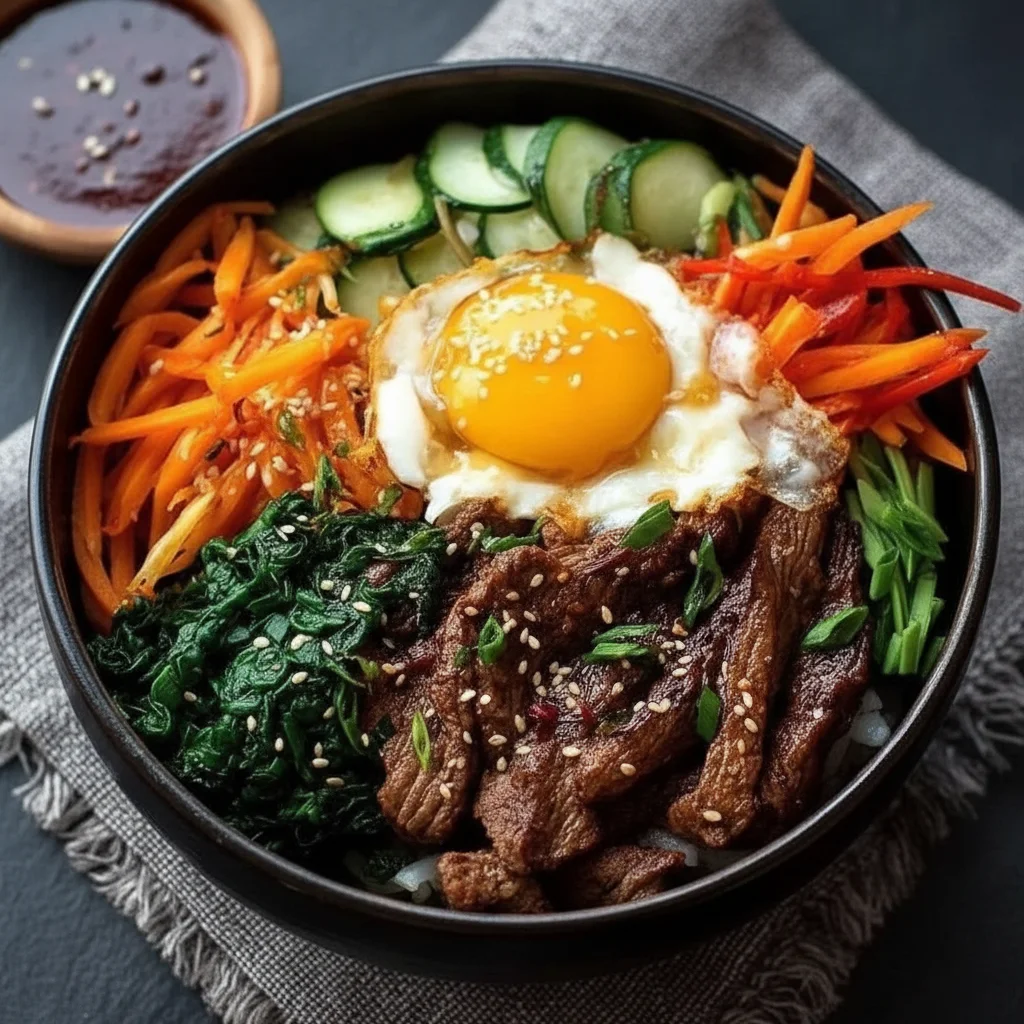
Ingredients
Method
- Marinate the Beef: In a medium bowl, combine the thinly sliced beef with the soy sauce, 2 tbsp sesame oil, minced garlic, brown sugar, grated pear, and black pepper. Mix well to ensure every piece of beef is coated. Set aside to marinate for at least 20-30 minutes at room temperature.
- Prepare the Vegetables: While the beef marinates, cook the vegetables. Blanch the spinach in boiling water for 30 seconds, then drain and rinse with cold water. Squeeze out all excess water. Toss with 1 minced garlic clove, 1 tsp sesame oil, and a pinch of salt. Do the same with the bean sprouts.
- Sauté the Other Veggies: Heat a little vegetable oil in a frying pan or wok over medium-high heat. Sauté the carrots for 2-3 minutes until slightly softened but still with a bite. Remove and set aside. Repeat with the courgette (cooking for 2-3 minutes) and the shiitake mushrooms (cooking for 4-5 minutes until golden). Season each vegetable lightly with salt as it cooks. I find that cooking them separately really helps maintain their individual flavours and textures.
- Make the Sauce: In a small bowl, whisk together the gochujang, 1 tbsp sesame oil, sugar (or honey), water, rice vinegar, and 1 tsp minced garlic. Set aside.
- Cook the Beef: Heat a large frying pan or wok over a high heat. Add the marinated beef in a single layer (you may need to do this in two batches to avoid overcrowding). Cook for 2-3 minutes per side, until caramelised and cooked through. Remove from the pan.
- Fry the Eggs: In the same pan, reduce the heat to medium and fry the four eggs sunny-side up, so the whites are set but the yolks are still lovely and runny. For a perfectly cooked egg, you can follow this guide to frying eggs.
- Assemble the Bowls: Divide the warm rice among four bowls. Artfully arrange a portion of the cooked beef and each of the prepared vegetables on top of the rice. Place a fried egg in the centre of each bowl. Drizzle with the bibimbap sauce, sprinkle with toasted sesame seeds and gochugaru (if using), and serve immediately.
Notes
For a traditional touch, serve in a hot stone bowl (dolsot) to get a crispy layer of rice. Mix everything together with the sauce before your first bite.